Top Baby & Toddler Clothing Brands in Nigeria - Discover Established Children's Apparel Brands

Nigeria's baby and toddler clothing brand has experienced major growth during the last ten years because of the country's increasing population and higher middle-class earnings and the public's growing understanding of infant health and safety standards. The country has experienced increased demand for children's clothing because organized retail stores and e-commerce websites have expanded their operations. The market offers a complete selection of products which includes innerwear outerwear traditional attire sleepwear and accessories that serve newborns and children until they reach three years of age. Both domestic manufacturers and international brands have established a notable commercial presence, serving diverse consumer segments across urban centers and semi-urban communities throughout Nigeria.
Which Are the Most Preferred Baby & Toddler Clothing Brands in Nigeria?
The chart below reflects ViewGates proprietary brand popularity ranking methodology, based on a combination of internal analysis, survey insights, consumer preference signals, search trends, digital visibility, publicly accessible industry data, and other comparative indicators. Rankings are independently evaluated and updated by the ViewGates Editorial & Research Team to deliver credible, research-backed insights.
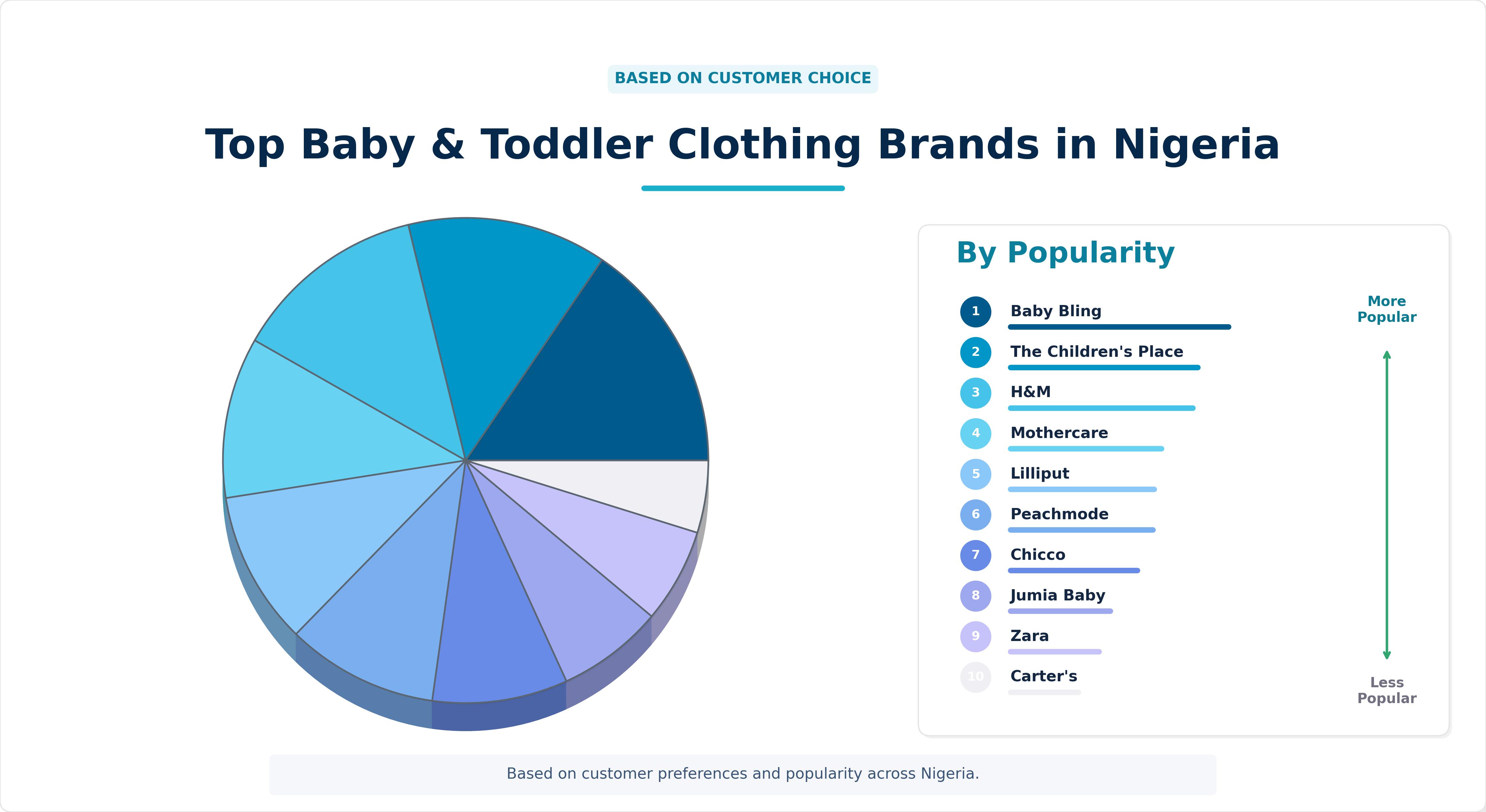
Best Baby & Toddler Clothing Brands in Nigeria
Here is the list of best baby & toddler clothing brands in Nigeria:
| Brand | Best For | Strengths |
| Baby Bling | Budget-friendly clothing | This brand offers stylish, affordable babywear for everyday use. |
| Mothercare | Premium baby clothing | This company provides for good quality fabrics, comfort, and a wide selection. |
| Jumia Baby | Online exclusive collections | This is one of the largest online retailers for baby products in Nigeria. |
| H&M | Trendy and affordable wear | This brand offers fashionable clothing for babies and toddlers at reasonable prices. |
| Carter's | Infant & toddler wear | This company is trusted brand for their durable, comfortable clothing for infants and toddlers. |
| Lilliput | Everyday essentials | They deliver casual, comfy clothing for daily wear at affordable prices. |
| Chicco | Premium baby clothing | This brand emphasizes on high-quality fabric and comfort for babies and toddlers. |
| The Children's Place | Stylish and affordable wear | They are well-known for trendy styles with great pricing for casual and special occasion wear. |
| Peachmode | Traditional clothing for kids | This brand is specialized in ethnic wear and modern styles for toddlers. |
| Zara | Premium, stylish clothing | This is popular brand for contemporary styles made from high-quality materials. |
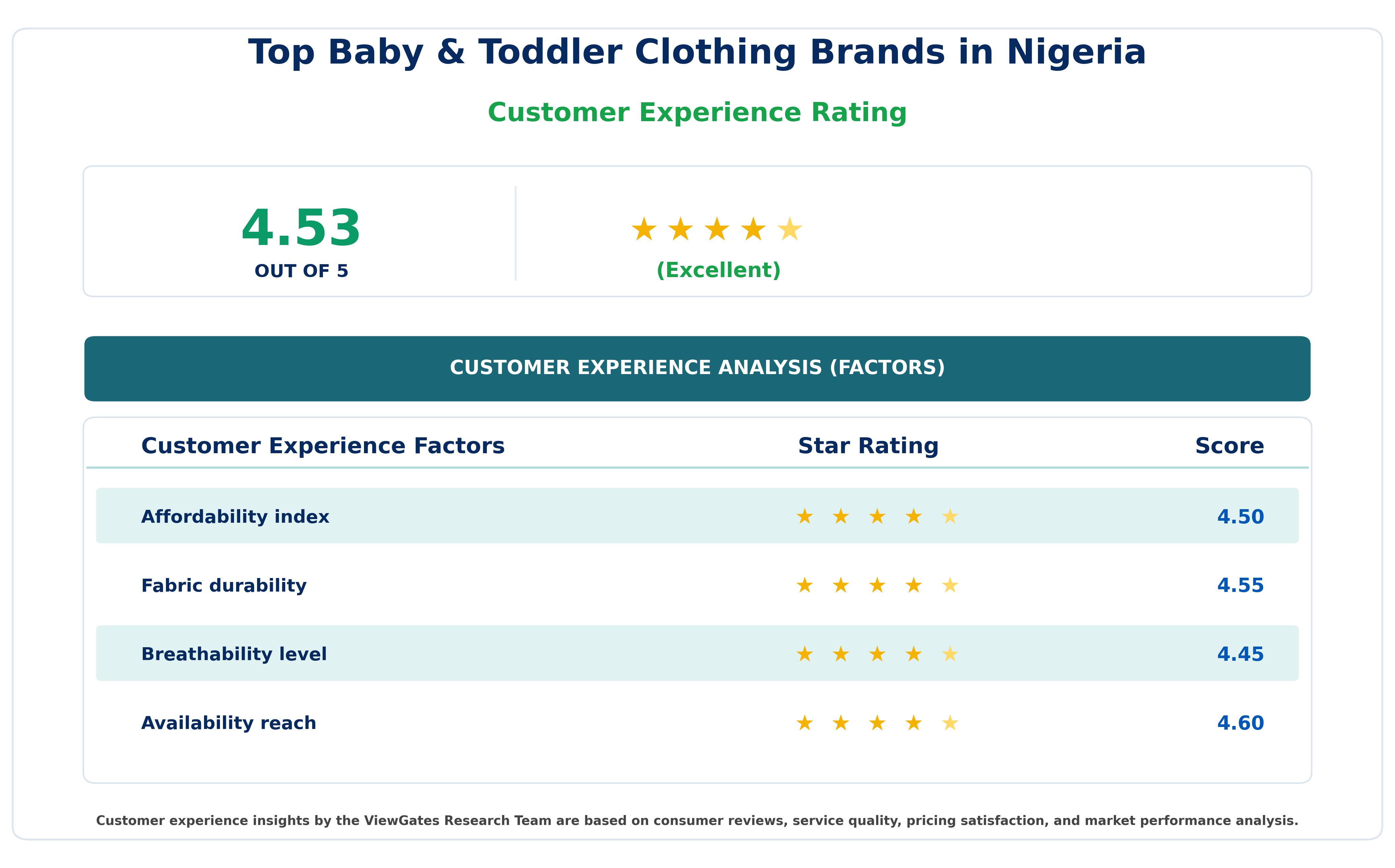
Customer Decision Factor Ratings of Top Baby & Toddler Clothing Brands in Nigeria
Key Considerations That Influence Consumer Choices While Making Purchase Decisions:
Why Choosing the Right Baby Clothing Brand Matters in Nigeria?
There are many types of infant apparel in the Nigerian market, which vary based on quality, safety concerns, prices, and others. The right selection of a product will depend on several considerations:
- Skin-friendly fabric – Garments made out of safe materials such as organic cotton should be preferred when it comes to choosing clothes for infants. Certificates that a garment has received, such as OEKO-TEX, are an additional indicator of safety.
- Consistency in sizing information - It seems that inconsistency of size standardisation is a problem common to many brands operating in the Nigerian market. Those that offer age-to-size chart have lower chances to get returned because of incorrect sizing.
- Durable after multiple washing – Clothes for infants require regular cleaning since these items will quickly grow out of size due to their fast growth. Pre-washed and durable items, which do not lose their look, should be used.
- Good presence in Nigeria - The distribution network of a company will determine how easy it will be to buy its products. Companies with a functioning website and retail shops will attract more customers within Nigeria.
- Affordability and reasonable price point – Infant clothes brands in Nigeria are diverse as they are present at various price points from low-cost to high-end brands. Mothercare Nigeria and Carter’s provide consumers with reliable value for their money.
Best Baby & Toddler Clothing Brands in Nigeria - Rated & Reviewed by Viewgates
| Company Name | Rating (out of 5) |
| Baby Bling | 4.4 / 5 |
| Mothercare | 4.7 / 5 |
| Jumia Baby | 4.3 / 5 |
| H&M | 4.6 / 5 |
| Carter's | 4.8 / 5 |
| Lilliput | 4.5 / 5 |
| Chicco | 4.7 / 5 |
| The Children's Place | 4.6 / 5 |
| Peachmode | 4.2 / 5 |
| Zara | 4.5 / 5 |
Our evaluations are based on user feedback, service quality, pricing, feature analysis, and overall market presence. We follow a structured methodology to ensure fair and consistent comparisons. You can learn more about how we rate and review companies on our Review Guidelines page. Ratings may vary based on user preferences and real-world usage.
If you have any questions, feedback, or suggestions regarding our evaluations, feel free to contact us at support@viewgates.com. Our team will review your query and respond as quickly as possible during our official working hours.
From Organic to Online: How Nigeria’s Baby Fashion Market is Transforming
- Organic and sustainable clothes – Parents in Nigeria have shown an increased tendency towards purchasing organic and sustainably made clothes without any harsh chemicals. The domestic and foreign clothing brands that have chosen to position themselves in the organic category have been experiencing rapid expansion in major urban areas.
- Sales via direct-to-customer channels – Nigerian e-commerce platforms Jumia and Konga enable clothing brands to sell products directly to consumers which lead to increasing popularity for these brands while decreasing their need for physical retail stores.
- Increased premiumization – An increasing number of urban Nigerians, especially those residing in Lagos, Abuja, and Port Harcourt, have shown their readiness to invest more money in premium baby clothes made from high-quality imported fabrics and exquisite designs.
- Gender-neutral clothes – There has been an increase in the number of young Nigerian parents who prefer gender-neutral clothes for their infants. The gender-neutral clothes are usually available in neutral colors and can be worn in various forms, thereby encouraging clothing brands to launch unisex lines.
- Global brands localization – Global clothing companies are gradually adopting their product designs, materials, and sizing in line with the climate and dressing culture of Nigeria as well as for traditional ceremonies.
An In-Depth Comparison of Baby & Toddler Clothing Solutions
This table compares several types of baby & toddlers based on their fabric, durability, design, price range, guiding to choose the best one:
| Feature | Budget-Friendly Brands | Premium Brands | Trendy Brands |
| Best For | Daily wear & essentials | Special occasions & comfort | Stylish, fashion-forward wear |
| Quality of Fabric | Soft cotton and blends | Premium, organic fabrics | Trendy fabrics, mixed blends |
| Durability | Moderate to high | High durability | Moderate to high |
| Cost | $1.08 – $3.25 approx. | $3.25 – $10.82 approx. | $10.82– $21.64 approx. |
| Designs | Simple, functional | Elegant, detailed designs | Modern, fashion-forward |
| Users | Low-income households | Middle-income households | Fashion-conscious parents |
Most Common uses of Baby & Toddler Clothing in Nigeria
- Commonly worn daily clothes including rompers, one piece and matching outfits are the most sold products for parents in Nigeria. Products by Mothercare Nigeria brand and various foreign brands via Jumia provide an array of choices available at affordable prices.
- Conventional clothing like the Ankara print clothes, Agbada outfits and other ethnic clothes have a remarkably great commercial value considering their popularity when it comes to dressing up children for naming ceremonies, celebrations and family events in Nigeria.
- Daily necessities for wearing like vest, bodysuits and night clothes are always sought after clothing. Both locally manufactured and imported brands made by known manufacturers form the largest portion of this product category.
- Warm season clothes that include light cotton clothes and outer wear are always popular due to Nigeria’s warm climatic conditions and are especially needed during the harmattan season in Northern parts of the country.
- Gifted bundles or newborn hamper containing matching inner wear, bibs and other accessories belong to increasingly popular commercial category owing to the popularity of gift giving during Nigerian baby naming ceremonies.