Top 10 Recycled Glass Companies in Japan | Explore Leading Manufacturers 2026

Japan is quickly becoming a global leader in recycled glass with an increasing commitment to sustainability and reducing waste. With cities like Tokyo and other industrial centers focusing on recycling glass for use in industries such as packaging and construction, Japan is establishing itself as a place that values recycling glass as a source of raw material. As the concept of circular economies has gained importance, recycling glass has become a critical part of efforts to reduce the negative impact on the environment and conserve our limited natural resources.
Which Are the Most Preferred Recycled Glass Companies in Japan?
The chart below reflects ViewGates proprietary brand popularity ranking methodology, based on a combination of internal analysis, survey insights, consumer preference signals, search trends, digital visibility, publicly accessible industry data, and other comparative indicators. Rankings are independently evaluated and updated by the ViewGates Editorial & Research Team to deliver credible, research-backed insights.
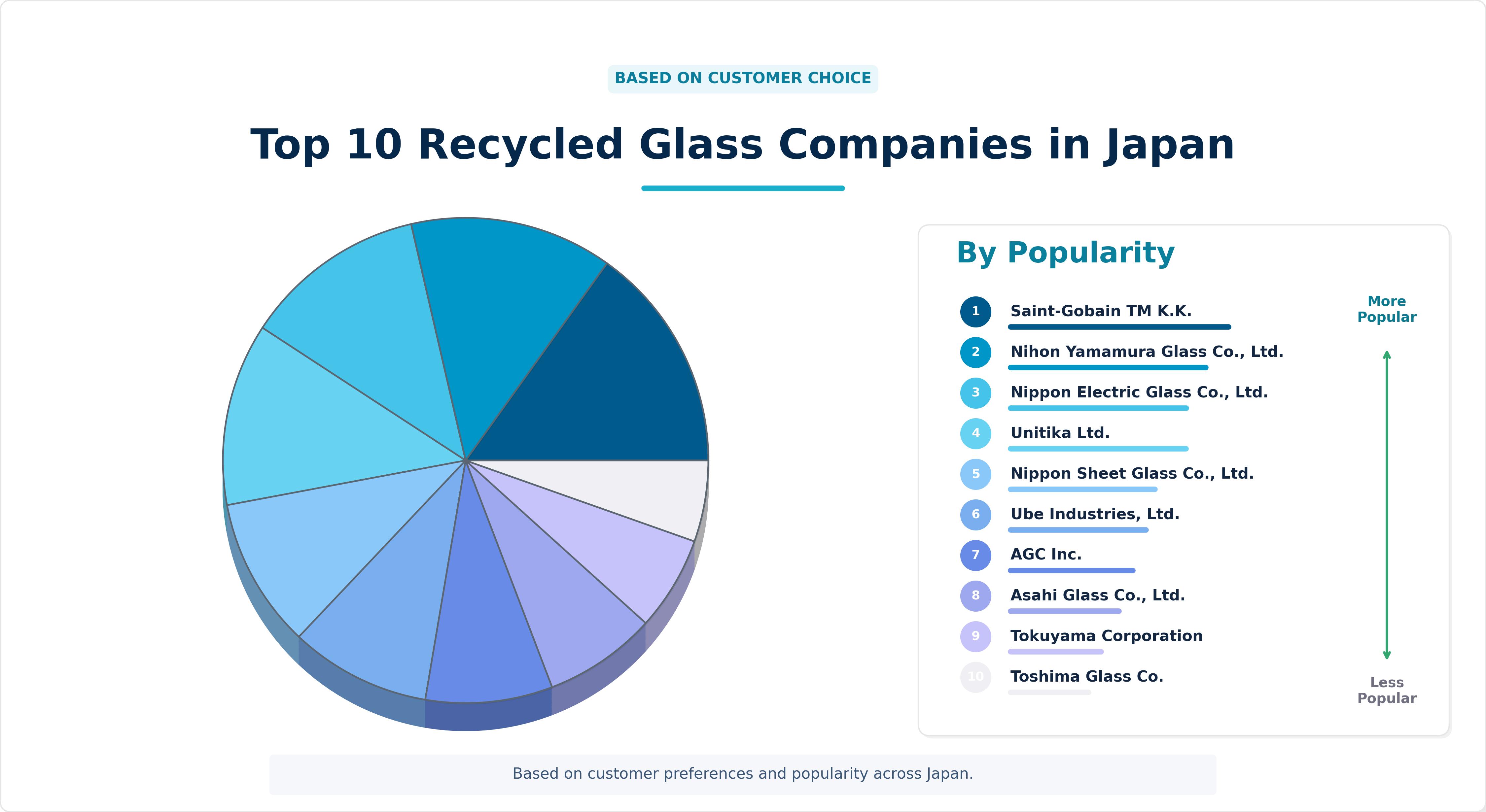
Role of Recycled Glass in Japan Packaging and Construction Sectors
In the Japan recycled glass market, recycled glass is widely used across sectors due to which this plays a significant role in multiple industries in Japan, especially in construction and packaging. In construction, recycled glasses are widely used in the production of tiles, insulation materials, and decorative elements, aligning with the country's green building initiatives. Within the packaging sector, especially within food and beverage industries use the recycled glass is crucial in reducing the carbon footprint of glass production. As both businesses and consumers started opting for more eco-conscious practices, the demand for recycled glass is expected to grow, strengthening its position as an essential material in Japan.
Overview of Top Glass Market Companies in Japan – Products, Price Ranges, and Ideal Buyers
| Company | Best For | Price Range (USD) | Ideal Buyer |
| AGC Inc. | Float glass recycling and industrial remelt solutions | $95 – $210 | Construction firms, exporters |
| Toshima Glass Co. | Container glass recycling and cullet processing | $85 – $190 | Beverage manufacturers, packaging plants |
| Nippon Electric Glass Co., Ltd. | High-performance recycled specialty glass | $100 – $230 | Electronics manufacturers, builders |
| Ube Industries, Ltd. | Industrial recycled glass materials and composites | $90 – $205 | Large-scale manufacturers |
| Asahi Glass Co., Ltd. | Sustainable architectural and container glass | $95 – $220 | FMCG brands, bottlers |
| Nippon Sheet Glass Co., Ltd. | Sheet and float glass recycling systems | $90 – $215 | Construction companies, wholesalers |
| Saint-Gobain TM K.K. | Advanced recycled architectural glass products | $100 – $235 | Real estate developers |
| Unitika Ltd. | Eco-friendly recycled industrial glass solutions | $85 – $195 | Green manufacturers |
| Tokuyama Corporation | High-purity recycled glass materials | $105 – $240 | Technology companies |
| Nihon Yamamura Glass Co., Ltd. | Bottle recycling and container glass manufacturing | $90 – $210 | Beverage brands, exporters |
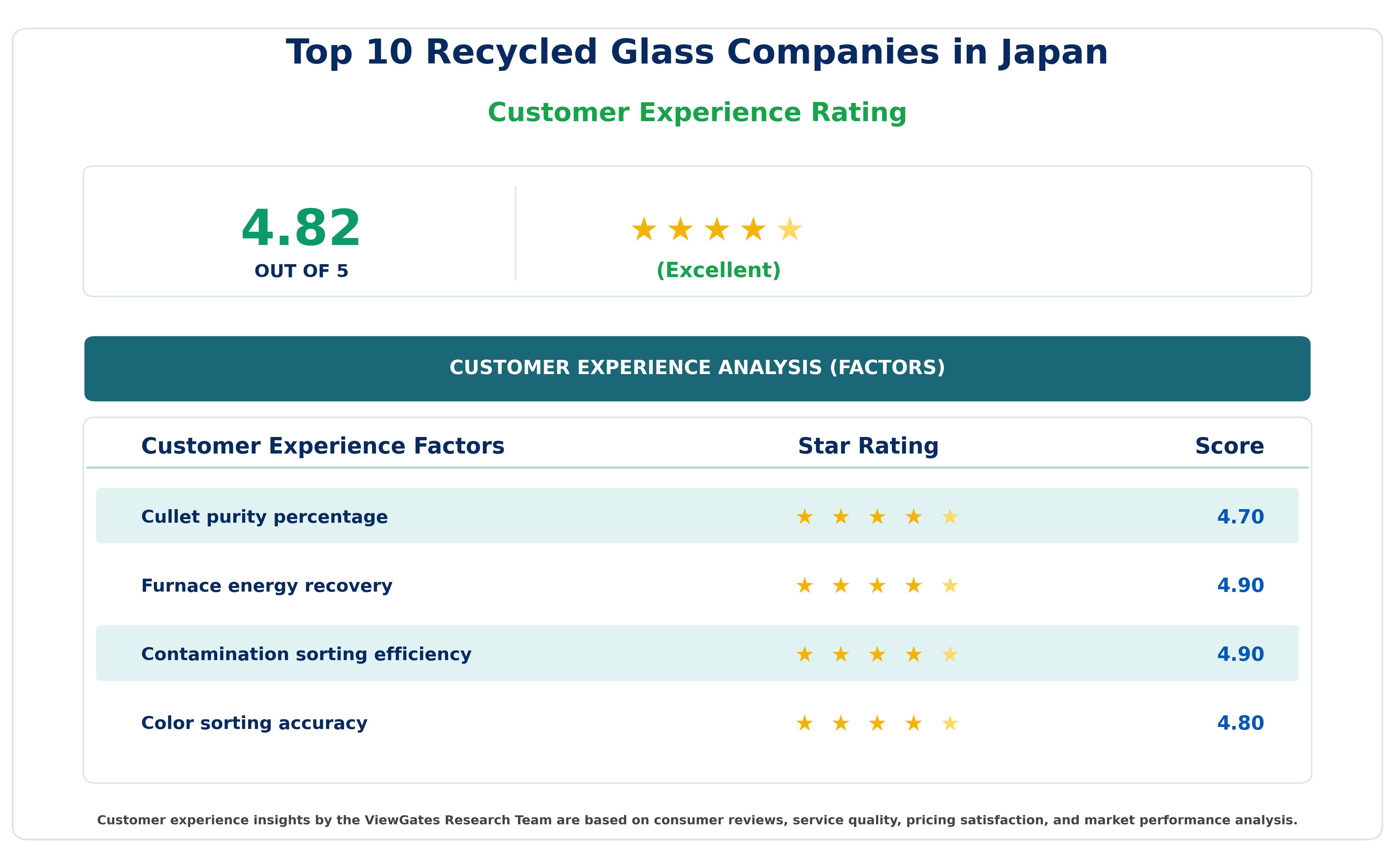
Customer Decision Factor Ratings of Top 10 Recycled Glass Companies in Japan
Key Considerations That Influence Consumer Choices While Choosing Recycled Glass:
Why Choosing the Right Recycled Glass Supplier is Important?
Here is why choosing right recycled glass supplier is significant:
- Consistency and reliability: The top suppliers provide consistency in quality of the recycled glass materials.
- Commitment to Sustainability: It is important that the supplier is committed to sustainability. Top suppliers are those that play an active role in ensuring that the recycling process produces minimum waste in a friendly manner towards the environment.
- Innovations and flexibility: Due to the growing popularity of recycled glass, companies that can innovate and customize their services have become highly sought after.
Latest Trends in Recycled Glass Usage: Embracing Sustainability
Some of the latest trends in recycled glass usage include:
- Construction uses the recycled glass to manufacture eco-friendly products such as aggregates, concrete, and tiles.
- Packaging companies have also been increasingly using recycled glass for packaging food and beverage products.
- With energy prices increasing, the demand for the use of recycled glass in manufacturing processes is growing.
- Government regulations support recycling and waste management by creating incentives to encourage the use of recycled glass in many industries.
- Japan is implementing state-of-the-art technologies to improve the efficiency and effectiveness of their glass recycling process.
How to Choose the Best Recycled Glass Supplier in Japan
When selecting recycled glass supplier in Japan, you should consider:
- Material Quality – Clean, Contaminant-Free Cullet
- Processing Standards – Proper sorting and remelt
- Consistency – Uniform size and strength
- Product range – Bottles, Sheets, Aggregates and Panels
- Customization – OEM, Private Labeling
- Sustainability - Environmental compliance
- Logistics Support – Domestic Transport & Export Handling
These characteristics assure trustworthiness, eco-friendliness, and competitiveness on the market level.
Below is the list of ratings and performance of top companies: A comprehensive rating and performance breakdown
AGC Inc.
Based on Analysis & Market Data
Toshima Glass Co.
Based on Analysis & Market Data
Nippon Electric Glass Co., Ltd.
Based on Analysis & Market Data
Ube Industries, Ltd.
Based on Analysis & Market Data
Asahi Glass Co., Ltd.
Based on Analysis & Market Data
Nippon Sheet Glass Co., Ltd.
Based on Analysis & Market Data
Saint-Gobain TM K.K.
Based on Analysis & Market Data
Unitika Ltd.
Based on Analysis & Market Data
Tokuyama Corporation
Based on Analysis & Market Data
Nihon Yamamura Glass Co., Ltd.
Based on Analysis & Market Data