Top Tea Manufacturers in Kenya – Discover Leading Tea Producers 2026

Tea is not just a beverage but an emotion of love. It is a vital part of the culture, economy, and daily life which is also known for its rich flavors, robust aroma, and health benefits. Also, it is one of the major sources of employment in Kenya, both in farming and processing. Around the world, there are numerous tea drinkers who chooses the high-quality tea leaves. From the highland plantations to global markets, Kenyan tea manufacturers are renowned for their commitment to quality and sustainability. Whether it is a hot cup in the morning or iced tea on a summer afternoon, the diversity and premium quality of tea has made it a household staple for many.
Which Are the Most Preferred Tea Manufacturers in Kenya?
The chart below reflects ViewGates proprietary brand popularity ranking methodology, based on a combination of internal analysis, survey insights, consumer preference signals, search trends, digital visibility, publicly accessible industry data, and other comparative indicators. Rankings are independently evaluated and updated by the ViewGates Editorial & Research Team to deliver credible, research-backed insights.
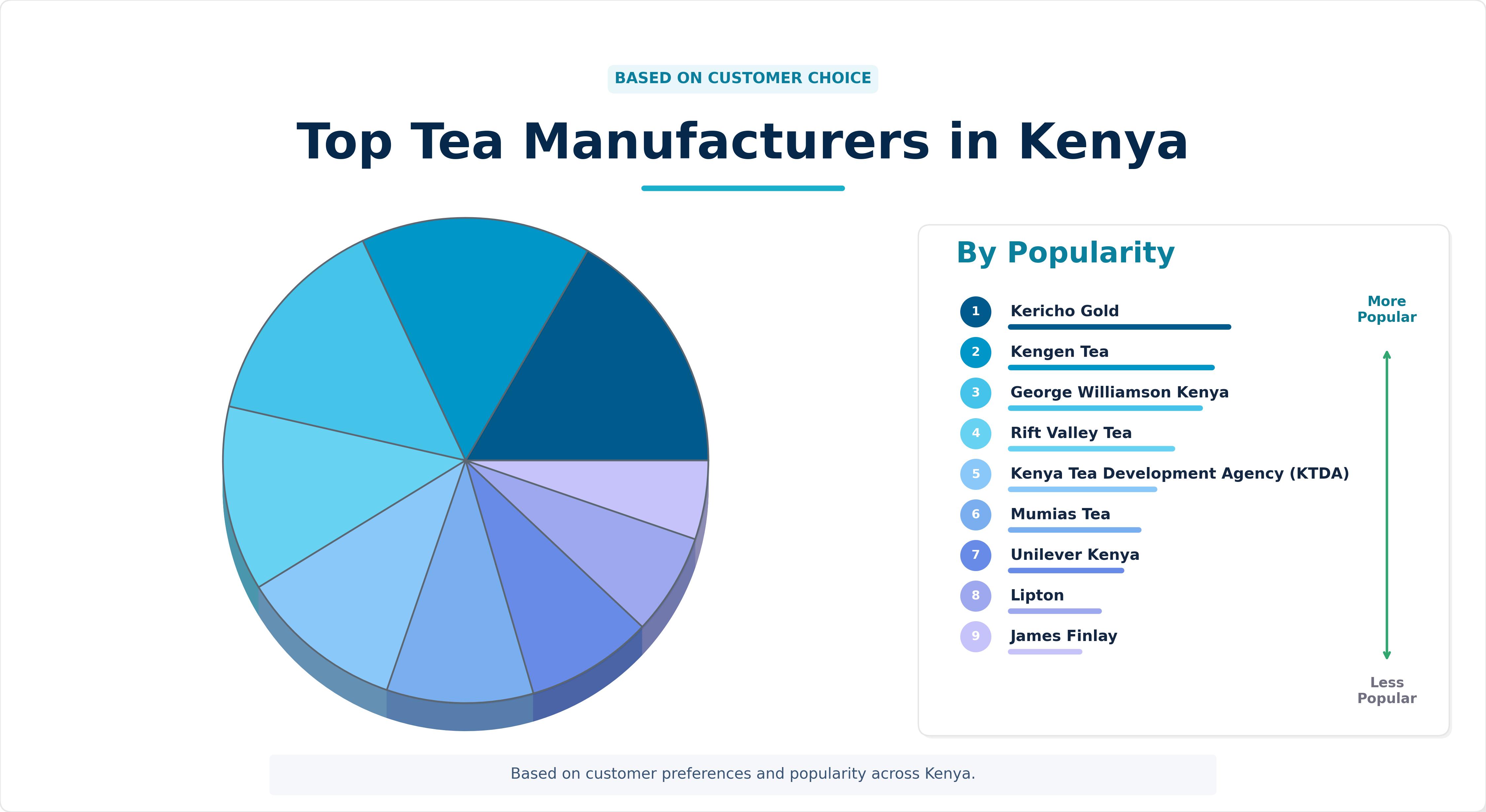
Best Brands of Tea in Kenya
Here are some popular tea brands with their strengths, and what they are best known for:
| Brand | Best For | Strength |
| Kengen Tea | High-quality Kenyan black tea | Strong local presence with trusted quality |
| Rift Valley Tea | High-end and flavoured teas | Unique flavour profiles and specialized products |
| Unilever Kenya | Packaged and ready-to-drink teas | Dependable mass production and distribution network |
| Mumias Tea | Organic and specialty teas | Well-known for premium organic blends |
| Kericho Gold | Loose leaf and packaged teas | Reliable quality with international recognition |
| Lipton | Mass-market tea | Global brand recognition and wide availability |
| Kenya Tea Development Agency (KTDA) | Smallholder tea farming | Extensive farmer network with sustainable practices |
| George Williamson Kenya | Premium tea blends | Strong focus on high-end markets and export quality |
| James Finlay | Bulk tea and blends | Expertise in bulk tea with a strong export footprint |
Customer Decision Factor Ratings of Top Tea Manufacturers in Kenya
Key Considerations That Influence Consumer Choices While Making Purchase Decisions: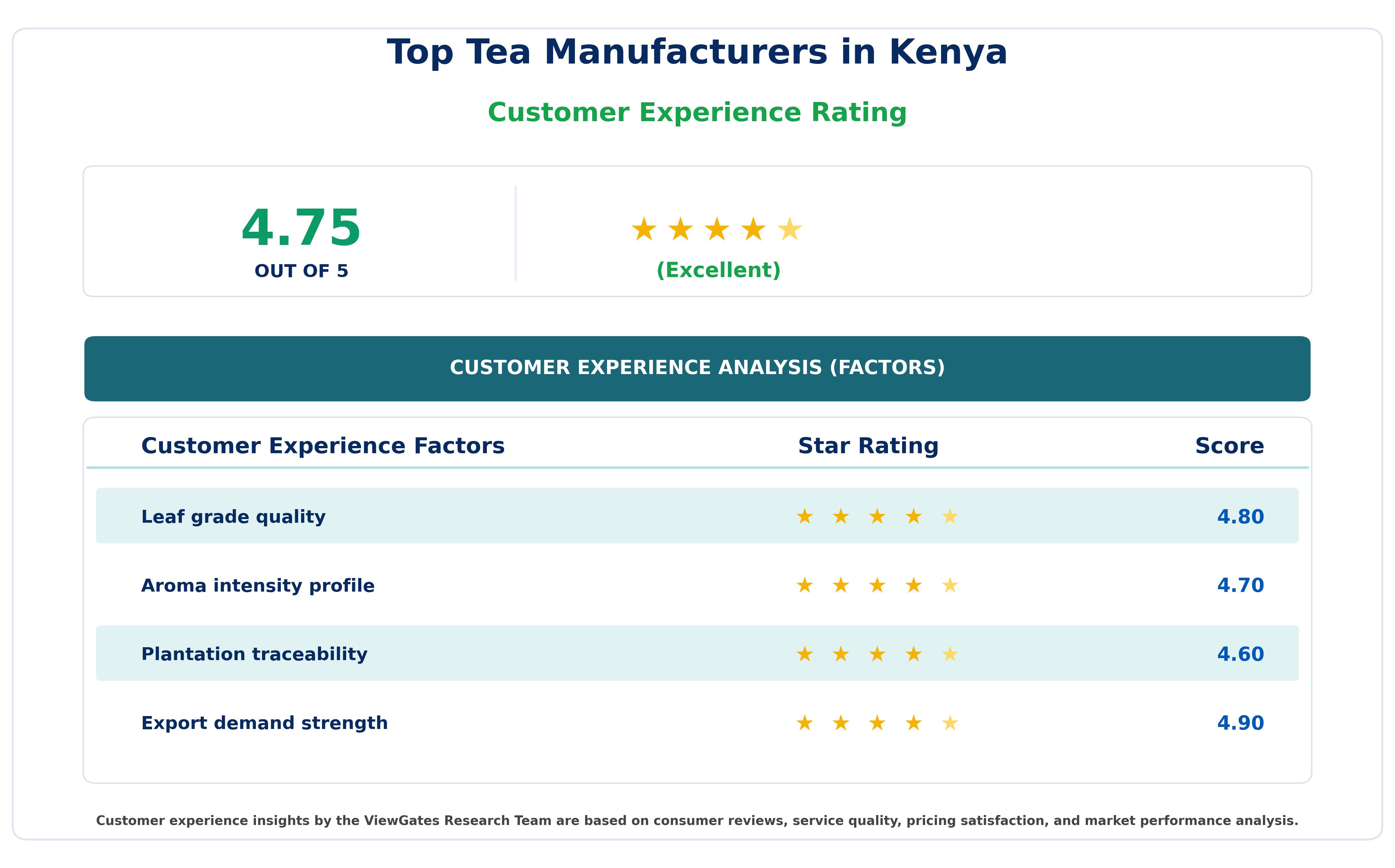
Why Choosing the Right Tea Manufacturer in Kenya Matters?
Choosing a tea manufacturer in Kenya will greatly affect the tea quality you receive. There are many variations of tea manufacturers' brands and their associated manufacturing processes. Many times, when you taste teas from different tea manufacturers, you can detect significant differences in flavour, quality, freshness, etc. When selecting a tea manufacturer in Kenya, there are several things that you should look for:
- Quality assurance: A reputable tea manufacturer will provide you with a higher quality product than many other tea manufacturers by utilizing both traditional and modern methods of production to achieve top quality.
- Ethical sourcing: A growing number of manufacturers are utilizing ethical sourcing for their products and doing so will often include the highlighting of environmentally and socially responsible/friendly practices.
- Groundbreaking and Innovative Packaging: Several top manufacturers have used cutting-edge technology to produce unique packaging types that are convenient to consumers, while still maintaining the highest possible level of quality.
Most Common Tea Types Used in Kenya
Here is some common tea types used and produced in the market:
| Product Category | Ideal Usage |
| Black Tea | Daily consumption and export markets |
| Green Tea | Health-conscious consumers |
| Packaged Tea | Mass consumption, widely available in retail stores |
| Herbal Tea | Medicinal and wellness purposes |
| Iced Tea | Ready-to-drink option for casual consumption |
| Flavoured Tea | Special occasions and premium tea products |
| Organic Tea | Niche markets and eco-conscious consumers |
| Loose Leaf Tea | High-end tea drinkers and specialty stores |
| Chai | Traditional Kenyan tea blend with spices |
| Specialty Blends | Export markets and premium offerings |
Rising Trends in Tea Consumption and Manufacturing in Kenya: A Look at the Future of the Industry
- Focus on sustainability: A focus on environmental sustainability is developing among tea growers in Kenya as they work to meet the growing global demand for organic and other eco-friendly products.
- Global appeal: Tea has been gaining a strong reputation internationally due to its excellent flavors and health benefits.
- Health-conscious choices: Many people are now making health & wellness-related decisions regarding the consumption of green teas from Kenya and special blends, due to increased awareness of these products' health benefits (e.g., antioxidant properties; enhanced metabolism).
- Demand for premium and specialty teas: The demand by tea drinkers for premium and specialty teas (e.g., single origin, organic, and flavored) has driven Kenyan tea manufacturers to develop new product innovations and develop more premium tea offerings to meet this increasing consumer demand.
- Growth in domestic consumption: Despite being one of the leading tea-exporting countries in the world, domestic sales of tea in Kenya have continued to increase.
An In-Depth Comparison of Innovative of Tea Products
Below is a comparison of various tea products based on features and price:
| Features | Basic Tea Products | Mid-Range Tea Products | Premium Tea Products |
| Type of Tea | Packaged black tea, loose leaf | Flavoured teas, organic blends | Specialty, artisanal, organic teas |
| Usage Level | Daily consumption | Regular with premium preference | Exclusive and luxury use |
| Quality Level | Standard | Enhanced | Top-tier |
| Price Range | USD 6 – 23 | USD 23 – 56 | USD 56 – 222+ |
| Target Audience | Mass consumers | Middle-income and premium buyers | Tea connoisseurs, export buyers |
| Export Potential | Low | Moderate | High |
How We Evaluate and Rate These Companies At Viewgates
Our evaluations are based on user feedback, service quality, pricing, feature analysis, and overall market presence. We follow a structured methodology to ensure fair and consistent comparisons. You can learn more about how we rate and review companies on our Review Guidelines page. Ratings may vary based on user preferences and real-world usage.
If you have any questions, feedback, or suggestions regarding our evaluations, feel free to contact us at support@viewgates.com. Our team will review your query and respond as quickly as possible during our official working hours.
Below is the list of ratings and performance of top companies: A comprehensive rating and performance breakdown
Johnson & Johnson Pvt. Ltd.
Based on Analysis & Market Data
Honasa Consumer Ltd
Based on Analysis & Market Data
Himalaya Global Holdings
Based on Analysis & Market Data
Procter & Gamble
Based on Analysis & Market Data
Kimberly-Clark
Based on Analysis & Market Data
The Moms Co.
Based on Analysis & Market Data
Me N Moms
Based on Analysis & Market Data
Artsana SpA
Based on Analysis & Market Data
ITC Ltd
Based on Analysis & Market Data