Top Process Automation Companies in Japan – Explore Advanced Industrial Solutions

Process automation refers to the use of smart software and machinery to handle repetitive jobs, like processing invoices, managing warehouse stock, or running assembly lines, automatically. Instead of your team spending hours on paperwork or manual sorting, process automation does it instantly and accurately. It is more like upgrading from a manual gearbox to a smooth automatic because it keeps the business running at a faster pace with less stress on the people involved.
Which Are the Most Preferred Process Automation Companies in Japan?
The chart below reflects ViewGates proprietary brand popularity ranking methodology, based on a combination of internal analysis, survey insights, consumer preference signals, search trends, digital visibility, publicly accessible industry data, and other comparative indicators. Rankings are independently evaluated and updated by the ViewGates Editorial & Research Team to deliver credible, research-backed insights.
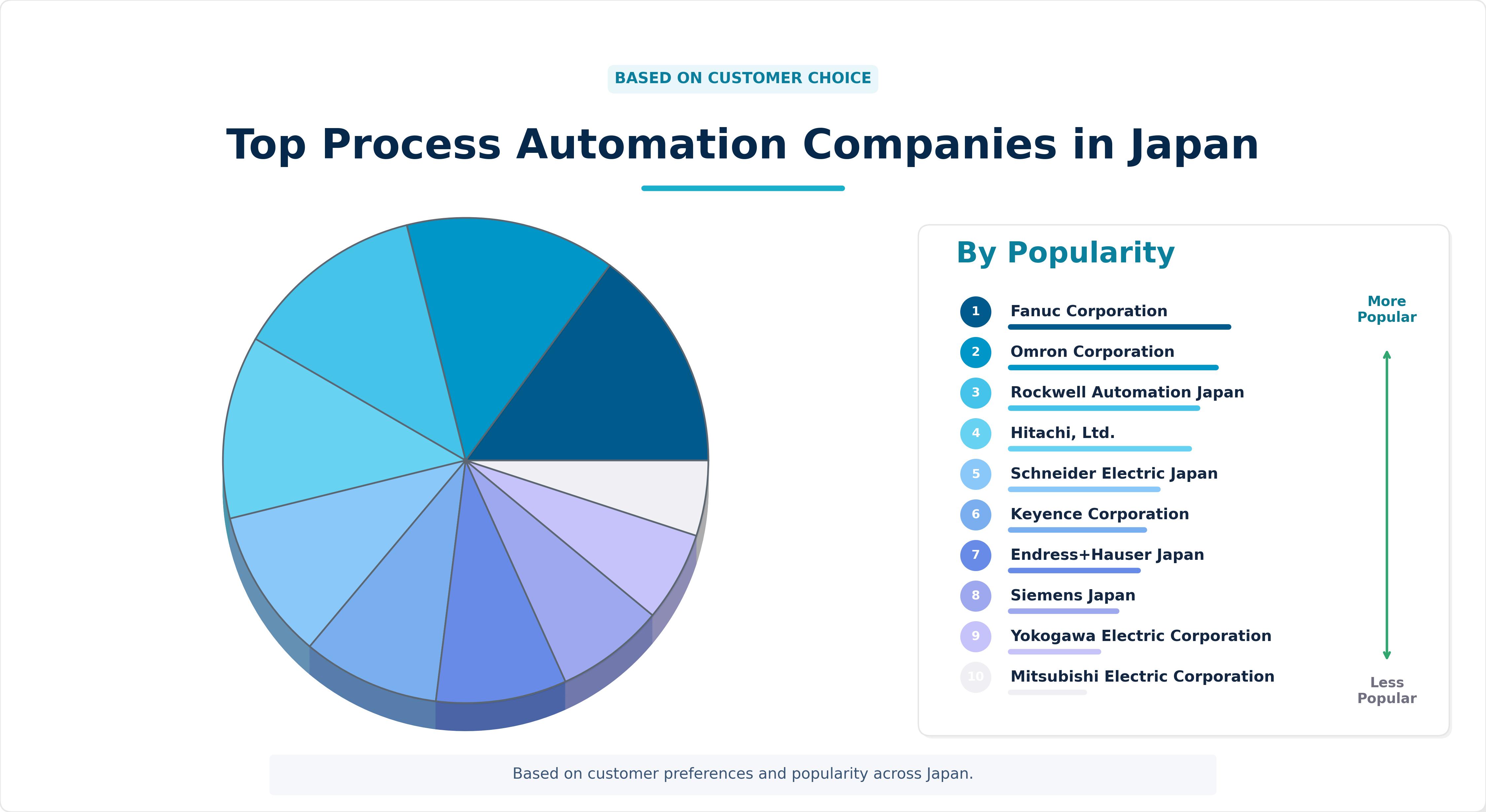
Best Brands in Japan Process Automation Industry
Here is a table showcasing the strengths of brands and what they are known for:
| Brand | Best For | Strengths |
| Yokogawa Electric Corporation | Process control & industrial automation | Known for innovative control systems and instrumentation for the manufacturing industry. |
| Keyence Corporation | Automation & sensing solutions | This is famous for advanced sensors, vision systems, and control devices that optimize industrial processes. |
| Mitsubishi Electric Corporation | Industrial automation systems | This brand has broad range of automation products, including PLCs and drives. |
| Omron Corporation | Factory automation & robotics | This is known for advanced robotics and automated production systems that improve manufacturing efficiency. |
| Fanuc Corporation | Industrial robots & CNC systems | Fanuc is major provider of industrial robots and automated manufacturing systems. |
| Hitachi, Ltd. | Industrial automation & IT solutions | It offers a broad range range of process automation solutions, with digital twins and AI-driven systems. |
| Schneider Electric Japan | Energy management & automation | This brand has strong presence in managing of energy and automation solutions. |
| Siemens Japan | Process automation & digitalization | This is major brand in digitalization of industries. |
| Rockwell Automation Japan | Industrial control systems | This brand provides innovative industrial automation and control systems with broad range of industries. |
| Endress+Hauser Japan | Process instrumentation & control | This is specialized to process automation solutions for industries like chemicals, pharmaceuticals. |
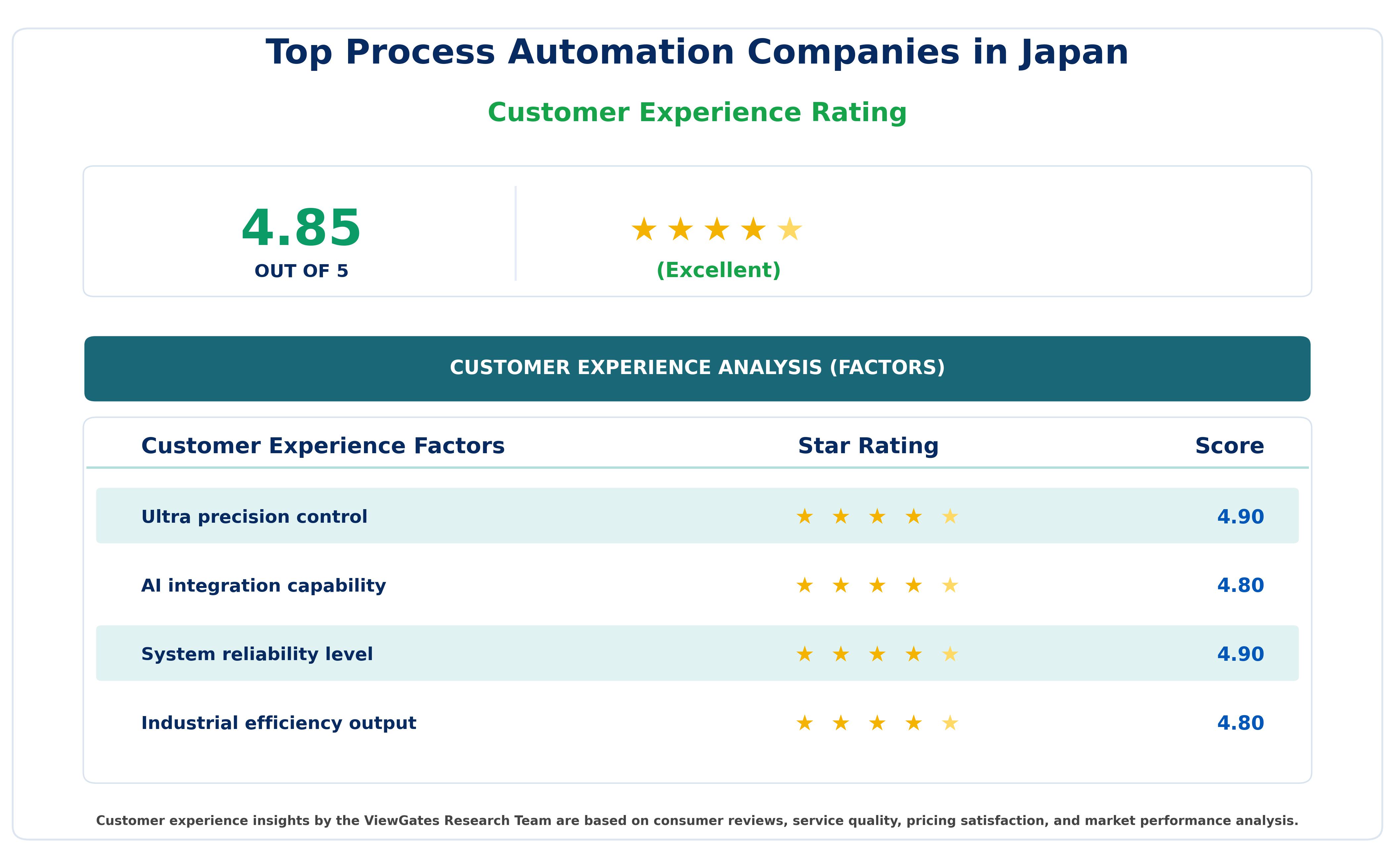
Customer Decision Factor Ratings of Top Process Automation Companies in Japan
Key Considerations That Influence Consumer Choices While Making Purchase Decisions:
Why Is it Important to Choose the Right Process Automation Service Providers In Japan?
Choosing the right process automation service providers in Japan is vital because the bar for quality and reliability is incredibly high. You need a provider that does not just understand code, but understands the specific "monozukuri" (craftsmanship) spirit of Japanese industry. The right provider helps you bridge the gap between aging legacy systems and cutting-edge AI, making sure your automation is seamless and doesn't disrupt daily operations. They also provide the local support needed to upskill your team, making sure the transition to a digital workforce is smooth, culturally fit, and delivers a massive return on investment.
Most Common Uses of Process Automation in Japan
Here is the list of common usages with different categories of process automation:
| Product Category | Ideal Usages |
| Industrial Automation Systems | This is used to control production processes and optimize efficiency. |
| Robotics | Robotics are used in assembly lines, material handling, and packaging in several industries. |
| Process Control Systems | Major industries like chemicals, food, and pharmaceutical industries to control production activities. |
| Sensors & Vision Systems | This is used in quality control and process monitoring for precision in manufacturing. |
| Programmable Logic Controllers | This technology has main role in the industrial machinery and automated processes in various sectors. |
| Energy Managing Systems | To optimize the energy usage in manufacturing and industrial processes. |
| Human-Machine Edge | It allows operators to interact with machines that is enhancing productivity and safety. |
| Artificial Intelligence Addition | AI is helping in predictive maintenance and automation of decision-making processes. |
| Distributed Control Systems | This is broadly used in industries like petrochemical and energy production for process automation. |
| Variable Frequency Drives | It controls the speed and torque of motors in various industrial applications. |
Latest Process Automation Trends: How Businesses are Restructuring Operations in Japan
- Hyper-Precision AI: Manufacturers are using AI "vision" systems to inspect thousands of parts per minute, finding small defects that the human eye might miss after a long shift.
- The "Cobot" Revolution: Rather than replacing people, industries in the country are leading the way with collaborative robots (cobots) that work side-by-side with humans in factories and even nursing homes.
- Aging-Care Automation: With a super-aging society, businesses are automating routine health monitoring and administrative tasks in healthcare to ease the burden on staff.
- Digital Twins: Companies are creating detailed digital versions of their entire factories, which enable them to evaluate changes and predict failures before they impact actual operations.
An In-Depth Comparison of Process Automation Solutions
Take a look on the process automation options with their features and costs:
| Features | Basic Process Automation Solutions | Mid-Range Process Automation Solutions | Advanced Process Automation Solutions |
| Level of Usage | Small applications in industries with low automation needs | Medium industries with higher complexity automation | Big industries with highly complex and integrated automation systems |
| Technology Additions | Traditional automation techniques for specific tasks | Integration of PLCs, sensors, and vision systems to automate various processes | Advanced automation with AI, IoT, and cloud technologies for predictive analytics and real-time monitoring |
| Energy Competence | Average operational energy consumption | Optimized energy consumption with upgraded technologies | Innovative energy-saving solutions with minimal environmental impact |
| Average Cost | $500,000 to $2 million | $2 million to $10 million | $10 million and above |
| Main Users | Small enterprises with basic automation needs | Specific sectors of large corporations | Large corporations or national industries with extensive process automation needs |
How We Evaluate and Rate These Companies At Viewgates
Our evaluations are based on user feedback, service quality, pricing, feature analysis, and overall market presence. We follow a structured methodology to ensure fair and consistent comparisons. You can learn more about how we rate and review companies on our Review Guidelines page. Ratings may vary based on user preferences and real-world usage.
If you have any questions, feedback, or suggestions regarding our evaluations, feel free to contact us at support@viewgates.com. Our team will review your query and respond as quickly as possible during our official working hours.
Below is the list of ratings and performance of top companies: A comprehensive rating and performance breakdown
Yokogawa India Ltd.
Based on Analysis & Market Data
Fanuc Corporation
Based on Analysis & Market Data
Omron Corporation
Based on Analysis & Market Data
Yaskawa Electric Corporation
Based on Analysis & Market Data
Keyence Corporation
Based on Analysis & Market Data
SMC Corporation
Based on Analysis & Market Data
Fuji Electric Co., Ltd.
Based on Analysis & Market Data
Azbil Corporation
Based on Analysis & Market Data
Hitachi, Ltd.
Based on Analysis & Market Data