Top Oil & Gas Manufacturers in Japan – Explore Major Energy Producers

Japanese oil and gas companies provide a comprehensive selection of top-notch products that serve both personal and business requirements. This includes refined fuels, lubricants, and petrochemical products needed for vehicles, machinery, and industrial tools. With an emphasis on eco-friendliness, they offer energy-efficient solutions that help reduce emissions and maintain reliable performance. Their products are built with the latest technology to improve fuel efficiency and encourage cleaner energy, ensuring reliable, sustainable solutions across different sectors.
Which Are the Most Preferred Oil & Gas Manufacturers in Japan?
The chart below reflects ViewGates proprietary brand popularity ranking methodology, based on a combination of internal analysis, survey insights, consumer preference signals, search trends, digital visibility, publicly accessible industry data, and other comparative indicators. Rankings are independently evaluated and updated by the ViewGates Editorial & Research Team to deliver credible, research-backed insights.
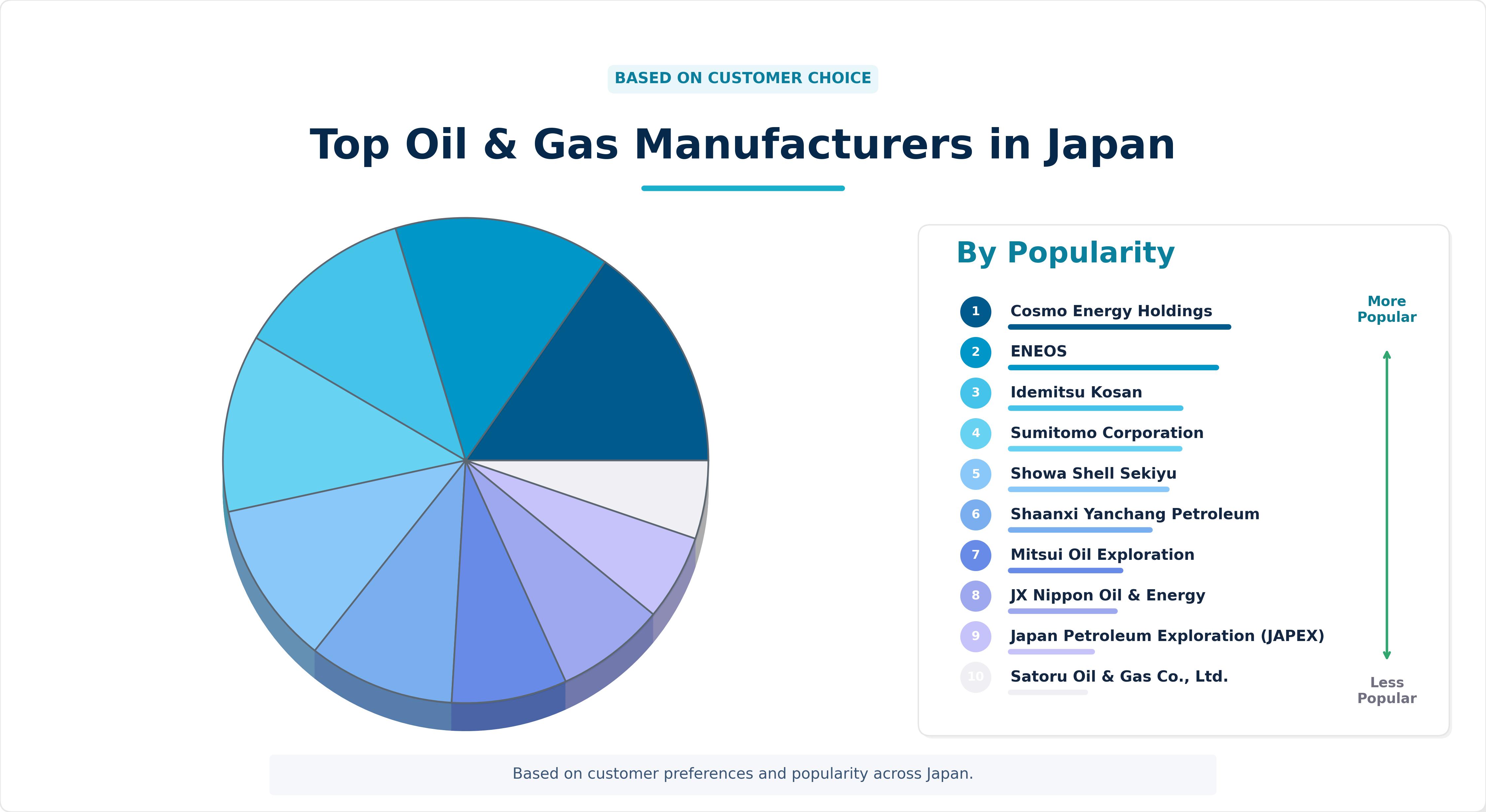
Best Brands in Japan’s Oil & Gas Industry
Here are detailing of few brands with their strengths and what they are best known for:
| Brand | Best For | Strengths |
| JX Nippon Oil & Energy | Refining & distribution | Leading player in the oil refining and petrochemical sectors, known for its innovation and sustainable energy practices. |
| Showa Shell Sekiyu | Gasoline & petrochemical products | Strong presence in eco-friendly energy and clean technology solutions and its established gasoline production capabilities. |
| ENEOS | Oil exploration & production | Recognized for its upstream and downstream operations, and strong commitment to reducing carbon damage. |
| Mitsui Oil Exploration | Oil & gas exploration | Expertise in exploration of offshore oil plays an important role in Japan's energy security and producing a large portion of the country’s domestic oil. |
| Idemitsu Kosan | Petroleum refining & distribution | Known for its eco-friendly practices in the refining industry and efforts to balance energy according to environment. |
| Cosmo Energy Holdings | Oil & gas exploration | Diverse portfolio of energy sector, with a strong focus on natural gas and oil exploration. |
| Japan Petroleum Exploration (JAPEX) | Oil exploration & production | Pioneer in Japan’s domestic oil and gas exploration and has expanded into renewable energy sources. |
| Sumitomo Corporation | Oil & gas trading | Renowned for its global energy trading network and involvement in large-scale oil and gas projects across the globe. |
| Shaanxi Yanchang Petroleum | Petroleum exploration & production | A major player in the upstream segment with strong domestic and international oil production operations. |
| Satoru Oil & Gas Co., Ltd. | Oil refining | Known for its highly efficient and cost-effective refining operations catering to Japan’s energy needs. |
Customer Decision Factor Ratings of Top Oil & Gas Manufacturers in Japan
Key Considerations That Influence Consumer Choices While Making Purchase Decisions:

Why Choosing the Right Oil & Gas Matters in Japan?
Choosing the right oil and gas supplier in Japan is essential for maintaining excellent performance, efficiency, and sustainability. Dependable fuels and lubricants play a crucial role in enhancing productivity and reducing operational expenses. It contributes to greener energy by lowering emissions and improving energy efficiency. In a time where innovation plays a crucial role, top oil and gas providers integrate cutting-edge technology with sustainable solutions, offering outstanding value with a reduced environmental impact, ensuring lasting benefits for businesses and the earth.
Most Common Uses of Oil & Gas in Japan
Here is the list of few categories of oil & gas with their ideal usages:
| Product Category | Ideal Usage |
| Refined Petroleum Products | In the transportation and as feedstock for petrochemical industries. |
| Natural Gas | For generation of electricity, industrial heating, and residential purposes. |
| Crude Oil | Mainly used for refining to produce fuels, lubricants, and petrochemical feedstocks. |
| Liquefied Natural Gas (LNG) | Imported for use in generation of power, industrial applications, and domestic use. |
| Petrochemical Products | This is very important for the manufacturing of plastics, fertilizers, and chemicals in many industries. |
| Biofuels | Used as a cleaner option for transportation fuels and heating, in line with Japan's push for diversification of energy. |
| Oil & Gas Exploration Technologies | Used to improve extraction efficiency and ensure eco-friendly production of oil and gas resources. |
| Refining & Distribution Equipment | Utilized in changing crude oil into valuable products and distributing them into commercial and industrial use. |
| Alternative Energy Solutions | Includes research and development of hydrogen and renewable energy sources as part of transition of energy. |
Understanding Consumer Trends: Why Choosing the Right Oil & Gas Matters in Japan
- Demand for Sustainability: Consumers are placing more importance on eco-friendly and sustainable energy options. There is a rising demand for oil and gas products that aim to reduce emissions and support environmental preservation.
- Energy Efficiency Awareness: With rising energy costs, consumers are more conscious of energy-efficient solutions. Consumers are looking for products that deliver excellent performance while reducing energy waste and cutting down on overall consumption.
- Preference for Innovation: Japanese consumers tend to favor forward-thinking, advanced solutions. They are more likely to select oil and gas companies offering next-gen products designed to boost fuel efficiency and lessen environmental impact.
- Transparency and Corporate Responsibility: A noticeable shift has occurred, with consumers increasingly choosing brands that demonstrate transparency and social responsibility. Companies that openly communicate their sustainability efforts and ethical values generally enjoy greater customer loyalty.
- Cost-Consciousness: With energy prices constantly changing, consumers are becoming more price-sensitive, looking for oil and gas products that provide the best value for money. Competitive pricing, combined with quality, is an important factor in their decision-making process.
An In-Depth Comparison of Oil & Gas Solutions in Japan
Here is a comparison of oil & gas solutions based on their features and costs:
| Features | Basic Oil & Gas Solutions | Mid-Range Oil & Gas Solutions | Advanced Oil & Gas Solutions |
| Level of Usage | Consumption of local energy for small-scale industries | Medium-scale use for large corporations and municipalities | Large-scale use for power generation, transportation, and industries |
| Technology Integration | Basic technology, such as traditional exploration and refining methods | More new techniques, including automated refining and exploration technologies | New technologies such as AI for energy management, and renewable addition. |
| Energy Efficiency | Standard consumption of fuel and emission rates | Improved efficiency in energy production and usage | Top notch technologies with reduction of carbon footprints |
| Average Cost | $1 million to $5 million | $5 million to $20 million | $20 million and above |
| Ideal Users | Small to medium-sized enterprises and industries | Large corporations and public utilities | National and multinational companies with extensive energy needs |
How We Evaluate and Rate These Companies At Viewgates
Our evaluations are based on user feedback, service quality, pricing, feature analysis, and overall market presence. We follow a structured methodology to ensure fair and consistent comparisons. You can learn more about how we rate and review companies on our Review Guidelines page. Ratings may vary based on user preferences and real-world usage.
If you have any questions, feedback, or suggestions regarding our evaluations, feel free to contact us at support@viewgates.com. Our team will review your query and respond as quickly as possible during our official working hours.
Below is the list of ratings and performance of top companies: A comprehensive rating and performance breakdown
Eneos Corporation
Based on Analysis & Market Data
Showa Shell Sekiyu
Based on Analysis & Market Data
JX Nippon Oil & Energy Corporation
Based on Analysis & Market Data
Mitsui Oil Exploration
Based on Analysis & Market Data
Idemitsu Kosan Co., Ltd.
Based on Analysis & Market Data
Sumitomo Corporation
Based on Analysis & Market Data
Shaanxi Yanchang Petroleum Co.
Based on Analysis & Market Data
Satoru Oil & Gas Co., Ltd.
Based on Analysis & Market Data